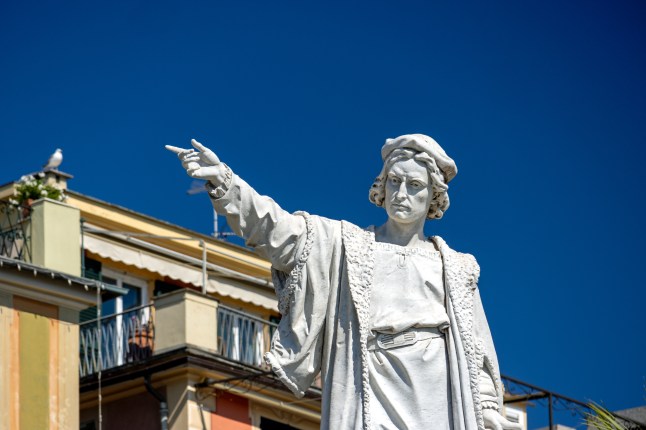
Christopher Columbus is believed to have been born in Genoa (Picture: Getty Images)
New DNA analysis of remains belonging to direct descendants of Christopher Columbus might have uncovered information about the explorer that could change the history books.
For centuries,it’s been believed that Columbus – the man who discovered America in 1492 – was Italian,with historians believing him to have been born in Genoa.
But now,thanks to the scientific discovery,it’s being suggested that Columbus might not have been from Italy at all and was in fact Spanish,having come from Galicia in the north west of the country.
And it doesn’t end there,because further analysis has suggested he didn’t come from the humble beginnings previously thought,and was actually of noble blood.
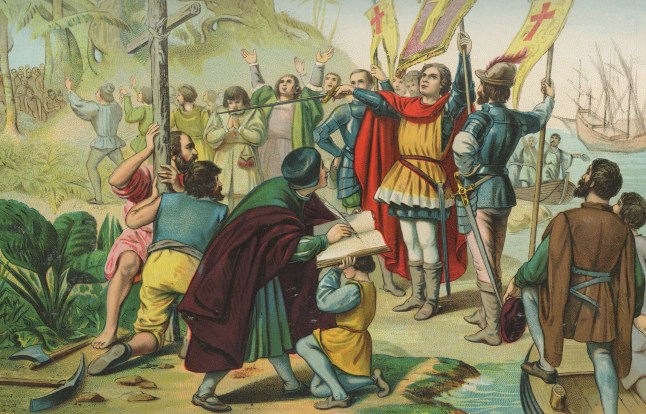
Could he actually have descended from Spanish nobility? (Picture: Getty Images)
The preprint study conducted by experts at the Citogen laboratory and the Complutense University of Madrid has suggested that Columbus,who is believed to have been born in 1451,may have descended from the Sotomayors – one of the most influential families in Galicia at the time.
After testing the DNA from 12 people buried in the Counts of Gelves family crypt in Spain,the researchers have pointed to the explorer having ancestral links with Pedro Alvarez de Sotomayor,a powerful 15th-century feudal lord also known as Pedro Madruga.
The possible link between Columbus and Madruga was made after two of those exhumed from the crypt were found to share genetic material in spite of having no known historical connection.
They were Jorge Alberto de Portugal,the third Count of Gelves – and a documented descendant of Columbus – and Maria de Castro Giron de Portugal,a Galician noblewoman with ties to the Spanish aristocracy.
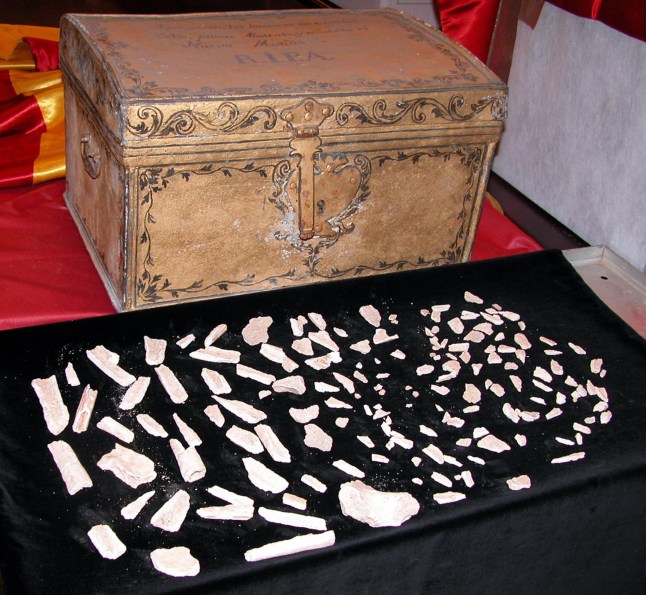
DNA samples from Spanish nobility pointed to a potential link with Columbus which had been previously undiscovered (Picture: AFP via Getty Images)
Experts,who used more than 10,000 genetic markers and a computer model that traced 16 generations of family history,went on to suggest that Pedro Madruga was the most likely shared ancestor.
To further add to their findings,they confirmed that the genetic link to Columbus disappeared when Madruga was removed from the deconstructed family tree.
However,that’s not the only clue that Columbus’ origins might not have been quite as first thought.
The explorer’s writings are said to contain syntax which is typical of Galician-Portuguese,while a linguistics expert from Georgetown University in Washington DC has suggested his main language was Castilian,spoken in northern and central Spain,and that he never wrote anything in the Genoese language of Ligurian.
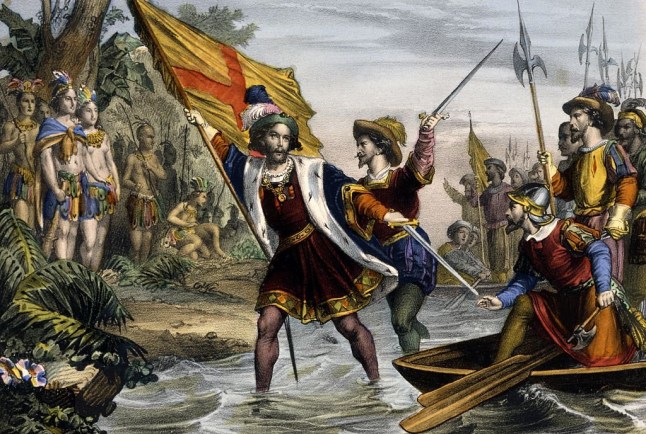
Theories about Columbus’ origins have continued to fascinate history buffs (Picture:ullstein bild/ullstein bild via Getty Images)
Others have pointed out that gold rings,which featured on his coat of arms,hinted at links to the Sotomayors.
Those who support the theory that Columbus was Galician also argue that the Spanish version of his surname,Colon,is documented in the region’s Pontevedra estuary.
However,the researchers state that the study is not conclusive,in that it has yet to be peer reviewed and did not include a comparison of the DNA samples found with that of Columbus’ own DNA.
It’s not the first time that the historical figure’s origins have come into question.
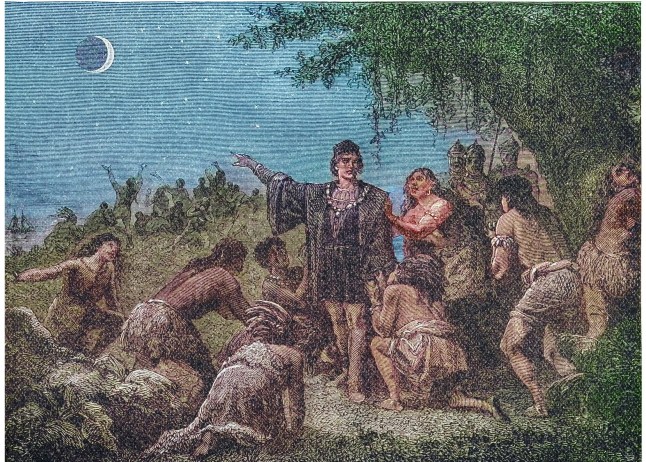
Some have suggested he was of Polish or even Scottish descent (Picture: Getty Images)
History books suggest Columbus was the son of a wool weaver in Genoa who later served in the Portuguese merchant navy and married a woman from Portugal,who was aristocratic but not as well off as some.
After being refused help by the Portuguese crown to fund a transatlantic voyage,he moved to Spain in 1485,later securing the funding he needed from monarchs Ferdinand and Isabella.
While he gave his place of birth on his will as Genoa,it’s been noted his contemporaries – especially many of those in Spain – never referred to him as being Italian,while the authenticity of his will was questioned during a legal dispute between his heirs.
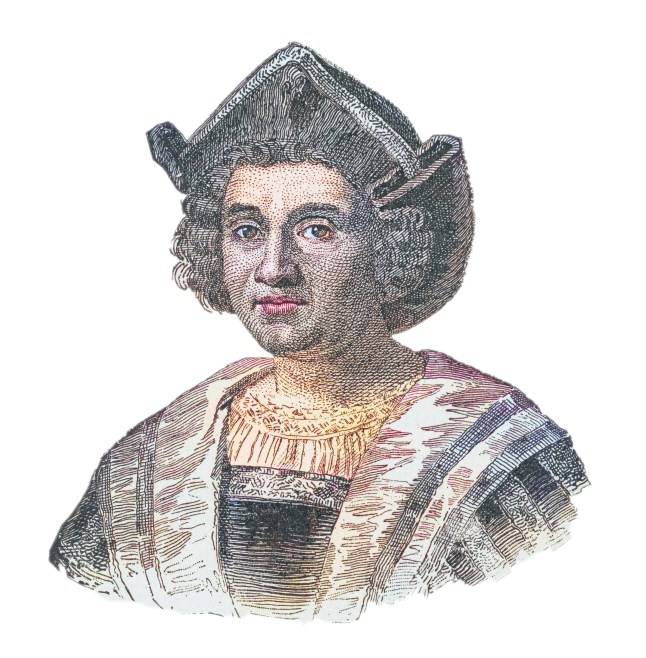
His background remains a source of fascination (Picture: Getty Images)
Others have suggested he was Portuguese,stating that he wouldn’t have been able to marry an aristocrat from the country if he hadn’t been.
It’s also been claimed that he was the son of a Scottish family living in Genoa.
Another theory suggests he may have been the secret son of a Polish king,or was Norwegian,Sardinian,Greek Byzantine,Corsican,or even Swedish.
Whether or not the new study provides conclusive proof as to his origins,it looks as if this is one debate that will continue to fascinate history buffs.


Topic Fashion: Ultimate Guide to the Latest Fashion Trends
© TopicFashion Privacy Policy Contact us